9th Class English - Chapter 1 The Price Less Gift All Question With Answer
↓ Question & Answer ↓
Question 1.
What did the writer experience in the restaurant?
(ଲେଖକ ଭୋଜନାଳୟରେ କ’ଣ ଉପଲବ୍ଧି କଲେ ?)
Answer:
The writer went to a vegetarian restaurant ( ଭୋଜନାଳୟ) during lunchtime. The restaurant was densely crowded as lots of people were eating and drinking there. He found that some of the chairs and tables had been pushed into a corner. He preferred a come table and sat there for lunch and started skimming through the newspaper.
Question 2.
What did he notice there?
(ସେ ସେଠାରେ କ’ଣ ଦେଖିଲେ ?)
Answer:
The writer noticed a very young girl looking at him. He observed that her eyes were large and there was a sad expression on her face. The girl while going out asked the cashier in a low voice something about the writer and wanted to know whether he was an Indian.
Question 3.
What was the writer’s first impression of the girl?
(ଝିଅଟିକୁ ନେଇ ଲେଖକଙ୍କ ପ୍ରଥମ ଭାବ କ’ଣ ଥିଲା)
Answer:
The way of looking at the girl at the writer repeatedly aroused his curiosity in her. Her large eyes with sad expression made him feel that she was facing some kind of trouble and was rather poor and unhappy.
Question 4.
What made the writer surprised?
(ଲେଖକଙ୍କୁ କ’ଣ ଆଶ୍ଚର୍ଯ୍ୟ କରିଥିଲା ? )
Answer:
The girl’s inquiry about the writer with the cashier and her looking at him once more before leaving the restaurant made the writer was surprised.
Question 5.
Why did he enquire from the cashier ? (ସେ କାହିଁକି କ୍ୟାସିୟରଠାରୁ ଅନୁସନ୍ଧାନ କଲେ ?)
Answer:
The girl’s interest to know about the writer aroused his curiosity in her. So he enquired from the waiter about the girl.
Question 6.
What information did he get from the cashier?
(ସେ କ୍ୟାସିଅରଠାରୁ କି ଖବର/ସୂଚନା ପାଇଲେ ?)
Answer:
The writer got the information from the waiter that the girl had her lunch in that restaurant on Saturdays only. She came to the restaurant on payday only because she earned very little
Question 7.
Where did the writer go on the next Saturday?
( ଲେଖକ ପରବର୍ତୀ ଶନିବାରରେ କେଉଁଠାକୁ ଗଲେ ?)
Answer:
The writer went to the same restaurant the next Saturday where he found the girl sitting at the same table as before (ପୂର୍ବଭଳି).
Question 8.
Why did he arrange the chair opposite hers?
(ସେ କାହିଁକି ତା’ (ଝିଅଟି) ସମ୍ମୁଖରେ ଚଉକି ଯୋଗାଡ଼ କଲେ ?)
Answer:
The next Saturday, he went to the same restaurant. He found the girl sitting at the same table as before and was eating. Then the writer went up to her and took the chair opposite hers. He wished her a good afternoon and started talking with her.
Question 9.
What query did the girl make about the writer?
(ଲେଖକଙ୍କ ସମ୍ପର୍କରେ ଝିଅଟି କ’ଣ ଅନୁସନ୍ଧାନ କଲା ?)
Answer:
The query that the girl made about the writer was whether he was an Indian.
Question 10.
What impression did the writer have about the family of the girl?
(ଝିଅଟିର ପରିବାର ଉପରେ ଲେଖକଙ୍କର କି ଧାରଣା ହେଲା ?)
Answer:
The writer came to know from the girl that she was living with her old widowed mother. Her only brother, who was her ony guardian, was serving as a soldier in India. They had not had a letter from him for a long time. Her mother was very worried and she was afraid something bad had happened to her son.
Question 11.
How was the writer treated at Maggie’s house? Who was there to welcome him?
(ମ୍ୟାଗିଙ୍କ ଘରେ ଲେଖକଙ୍କୁ କିଭଳି ଚର୍ଚ୍ଚା କରାଗଲା ? କିଏ ସେଠାରେ ତାଙ୍କୁ ସ୍ଵାଗତ କଲେ ?)
Answer:
The writer reached Maggie’s house accompanying her. She took him to her mother who was in the kitchen. She introduced (ପରିଚିତ କରାଇଲେ) him to her mother. Her mother was very glad to meet an Indian. She welcomed (ସ୍ଵାଗତ କଲେ ) the writer eagerly. The writer was treated kindly at Maggie’s house.
Question 12.
What was Mrs. Bethy doing when the writer met her? Why was she unwilling to go for
a handshake?
(ଲେଖକ ଯେତେବେଳେ ଶ୍ରୀମତୀ ବେଥଙ୍କୁ ଭେଟିଲେ ସେ କ’ଣ କରୁଥିଲେ ? ହାତ ମିଳାଇବାକୁ ସେ କାହିଁକି ଅନିଚ୍ଛୁକ ହେଲେ ?)
Answer:
When the writer met Mrs. Bethy, she was in the kitchen making cakes. She was unwilling ( ଅନିଚ୍ଛୁକ) to handshake (ହାତ ମିଳାଇବା) with the writer because her hands were covered with flour.
Question 13.
Why did the girl usually visit the restaurant on Saturdays?
(ଯୁବତୀ ଜଣକ ସାଧାରଣତଃ ଶନିବାର ରେଷ୍ଟୁରାଣ୍ଟକୁ କାହିଁକି ଯାଉଥିଲେ?)
Answer:
The girl was very poor. She did not earn much. Saturday was her payday. Therefore, she usually visited the restaurant on Saturdays to have her lunch there.
Question 14.
What did Mrs. Bethy believe about the ring?
(ମୁଦିଟି ସମ୍ପର୍କରେ ଶ୍ରୀମତୀ ବେଥ୍ କ’ଣ ବିଶ୍ଵାସ କରୁଥିଲେ ? )
Answer:
Mrs. Bethy had a ring that her son had sent from India. She believed that the ring was a miraculous thing and one could see and know about a distant person and his action through the ring by gazing at it and concentrating on him.
Question 15.
What made the author to tell a lie about the ring?
(ଲେଖକଙ୍କୁ ମୁଦିଟି ବିଷୟରେ କ’ଣ ପାଇଁ ମିଛ କହିବାକୁ ପଡ଼ିଲା ?)
Answer:
Maggie persistently (repeatedly) requested the author to look into the ring and tell her mother that Franky was all right and alive in India. As a result, her mother could recover from her serious illness. So keeping this in mind, the author had to tell a lie about the ring.
Question 16.
Did the telling of a lie benefit Mrs. Bethy?
(ମିଛଟିଏ କହିବା ଶ୍ରୀମତୀ ବେଥ୍ଙ୍କର ଉପକାର କଲା କି ?)
Answer:
Yes, telling a lie on the part of the writer gave many benefits to Mrs. Bethy who was lying sick on the bed. After hearing about her son’s well-being, the old woman raised her head, and tears of happiness rolled down her eyes. Mrs. Bethy soon recovered from her illness
Question 17.
Why did the writer feel guilty about himself?
(ଲେଖକ କାହିଁକି ନିଜକୁ ଦୋଷୀ ମନେକଲେ ?)
Answer:
The writer felt guilty about himself because he calculated and found that Franky had been killed some days when he told Mrs. Bethy that her son was alive and all right in India.
Question 18.
What was Maggie’s gift to the writer?
(ଲେଖକଙ୍କୁ ମାଗିର ଉପହାର କ’ଣ ଥିଲା ?)
Answer:
When Maggie was assured of the writer’s visit to her brother’s grave in India, her face was filled with gratitude. She thanked the writer and gave him a shilling to buy flowers and requested him to lay them on her brother’s grave for her. This was in fact Maggie’s gift to the writer. Maggie’s gift to the writer was only a shilling which she had earned with so much toil.
Question 19.
Why was it a priceless gift?
(ଏହା କାହିଁକି ଏକ ଅମୂଲ୍ୟ ଉପହାର ଥିଲା ?)
Answer:
The shilling that the girl gave to the writer to buy flowers for her dead brother was not an ordinary one. It was an embodiment of her love, sacrifice, joy, and emotion for her brother. Its cost was beyond all price. It was rare and of high value. Thus, it was a priceless gift.
Question 20.
Did Maggie love her brother dearly? Give reasons.
(ମାଗି ତା’ ଭାଇକୁ ଖୁବ୍ ଭଲ ପାଉଥିଲା କି ? କାରଣ ଦର୍ଶାଅ ।)
Answer:
Maggie’s love for her brother was sacred and profound. It is beyond description. Her offering of hard-earned shilling for the purchase of flowers to shower on her brother’s grave and a sense of joy as assured by the writer were enough to know about her love for her brother.
Question 1. Why did the writer choose the corner table in the restaurant?
(ଭୋଜନାଳୟରେ ଲେଖକ କାହିଁକି କୋଣରେ ଥିବା ଟେବୁଲଟିକୁ ବାଛିଲେ ?)
Answer:
The writer chose the comer table because the restaurant was very crowded. He saw some of the chairs and tables had been pushed into a comer. He thought a comer place would be a suitable place for lunch and skimming through a newspaper.
Question 2. How did the writer start a conversation with the young girl ?
ଲେଖକ କିପରି ଯୁବତୀ ଝିଅଟି ସହିତ କଥାବାର୍ତ୍ତା ଆରମ୍ଭ କଲେ ?)
Answer:
The writer saw the young girl in the restaurant the next Saturday. He went up to her and took the chair opposite hers. He wished her a good afternoon. Then he was able to start a conversation with her.
Question 3. How could the writer guess the girl to be poverty-stricken?
(ଝିଅଟି ଦାରିଦ୍ର୍ୟ-ପ୍ରପୀଡ଼ିତା ବୋଲି ଲେଖକ କିପରି ଅନୁମାନ କରିପାରିଲେ ?)
Answer:
The writer on his first meeting with the girl had observed a sad expression in her eyes. The writer also came to know from the waiter of the restaurant that she only came for lunch on Saturdays being her payday. Perhaps she did not earn much. All these things made the writer guess the girl to be poverty-stricken.
Question 4. Which of the following do you think the author will talk about after meeting the girl?
(ନିମ୍ନୋକ୍ତ କେଉଁଟିକୁ ଲେଖକ ଝିଅଟିକୁ ଭେଟିବା ପରେ କହିବେ ବୋଲି ତୁମେ ଭାବୁଛ ?)
(a) Meeting the girl again
(b) Enquiring about her nature of work
(c) about her family
(d) all of the above.
Answer:
(c) about her family
Question 5. ‘I was moved by what he said.’ What impression did the writer get about the girl?
(‘ସେ ଯାହା କହିଲେ ମୁଁ ସେଥୁରେ ପ୍ରଭାବିତ ହେଲି ।’’ ଝିଅଟି ବିଷୟରେ ଲେଖକ କି ଧାରଣା ପାଇଲେ ?)
Answer:
Being moved by the words of the waiter, the writer’s curiosity about the girl grew. He took pity of her poverty and wanted to help her in any way.
Question 6. What impression did the girl have on India?
(ଝିଅଟିର ଭାରତ ଉପରେ କି ଧାରଣା ଥିଲା ?)
Answer:
The girl and her mother had good knowledge of India. That is why they wanted to know from the writer about the kind of country India was. Her mother also wanted to know about Punjab where her son was posted as a soldier. They thought that India was a land of too many snakes and tigers. People in India were often killed by them. They had a strange idea about Indians. They thought Indians were truthful and they could tell the past and the future of man gazing at a ring. It is a land of miraculous happenings.
Question 7. ‘Will it be too much of a lie ?’ Why did the girl say so?
(ଝିଅଟିର ଭାରତ ଉପରେ କି ଧାରଣା ଥିଲା ?)
Answer:
The girl was too much worried about the miserable condition of her mother. She wanted the writer to tell a lie before her mother that her son Franky was alive and all right. She wanted the writer to tell this lie looking into the crystal for the benefit of her mother. For a good cause if a lie is told, it could be no sin at all. That is why the girl said so.
Question 8. Why did the writer feel ashamed to face Mrs. Bethy at the time of his return to India?
(ଲେଖକ ଭାରତ ଫେରି ଆସିବାବେଳେ ଶ୍ରୀମତୀ ବେଥଙ୍କୁ ଭେଟିବାକୁ କାହିଁକି ଲଜ୍ଜାବୋଧ କଲେ ?)
Answer:
At the time of his return to India, the writer went to Maggie and her mother to say goodbye. But the family was in mourning. Franky had been killed in the fighting on the frontier. The writer calculated and found that Franky had been dead some days before when he told his mother he was alive and well. Therefore he felt ashamed to face Mrs. Bethy. Out of shame, Mr. Gupta wrote to them announcing his departure.
Question 9. Why was the shilling Maggie presented to the writer an invaluable offering?
(ମାଗି ଲେଖକଙ୍କୁ ଦେଇଥିବା ସିଲିଙ୍ଗ୍ଟି କାହିଁକି ଏକ ଅମୂଲ୍ୟ ଉପହାର ଥିଲା ?)
Answer:
The shilling that Maggie presented to the writer was not an ordinary gift. It was the symbol of her true love, sacrifice, and emotion for her brother as it was meant for the purchase of flowers to be showered on her brother’s grave. The cost of the shilling was beyond all prices. It was rare and of high value. Thus the shilling was an invaluable offering
Words that are not derived or developed from other words are called primary words.
(ମାଗି ଲେଖକଙ୍କୁ ଦେଇଥିବା ସିଲିଙ୍ଗ୍ଟି କାହିଁକି ଏକ ଅମୂଲ୍ୟ ଉପହାର ଥିଲା ?)
In other words, words having no suffixes or prefixes are primary words.
Example – Orange, right, fast, slow.
Compound words are formed noun to noun (moonlight, village bridge) adjective + noun (sweetheart), verb + noun (breakfast) gerund + noun (drawing room), preposition + noun (overcoat) noun + adjective (lifelong).
Compound words (ଯୌଗିକ ଶବ୍ଦ)are formed,
(i) noun + noun (moonlight, village bridge) (ବିଶେଷ + ବିଶେଷ୍ୟ)
(ii) adjective + noun (sweetheart) (ବିଶେଷଣ + ବିଶେଷ୍ୟ)
(iii) verb + noun (breakfast) (କ୍ରିୟାପଦ + ବିଶେଷ୍ୟ )
(iv) gerund + noun (drawing room) ( ଜିରଣ୍ଡ + ବିଶେଷ୍ୟ)
(v) preposition + noun (overcoat) (ବିଭକ୍ତିସୂଚକ ଅବ୍ୟୟ + ବିଶେଷ୍ୟ)
(vi) noun + adjective (lifelong) (ବିଭକ୍ତିସୂଚକ ଅବ୍ୟୟ + ବିଶେଷ୍ୟ)
By adding prefixes like mis, un, in, dis, it, anti, de, make the word negative and by adding suffixes we change the words from noun to adjective, adjective to verb, adjective to an adverb, and verb to noun. This is called derivation. Thus we find a family of words.
Derivation (ବ୍ୟୁତ୍ପତ୍ତି) – It is the name given to the process of making a new word from an old one (word) by the addition of some prefixes or suffixes.
(ପୂର୍ବ ପ୍ରତ୍ୟୟା ବା ପର ପ୍ରତ୍ୟୟ ଯୋଗରେ ପୁରୁଣା ଶବ୍ଦରୁ ନୂତନ ଶବ୍ଦ ଗଠନ ପ୍ରକ୍ରିୟାକୁ ବ୍ୟୁତ୍ପରି ବା କୁହାଯାଏ ।)
(i) Noun + Noun
beauty – spot (ସୌନ୍ଦର୍ଯ୍ୟ ସ୍ଥାନ)
bullock – cart (ବଳଦଗାଡ଼ି)
tax – collector (କର/ଟିକସ ଆଦାୟକାରୀ)
wine – shop (ମଦ ଦୋକାନ)
hospital – bed (ଡାକ୍ତରଖାନା ଶଯ୍ୟା)
stone – work (ପ୍ରସ୍ତର କାର୍ଯ୍ୟ)
maid – servant (ଦାସୀ)
orange-juice (କମଳାରସ)
book – maker (ପୁସ୍ତକ ନିର୍ମାତା)
police – dog (ପୋଲିସ କୁକୁର)
ballot – papers ( ଭୋଟ କାଗଜ)
pocket – money (ପକେଟ ଖର୍ଚ୍ଚ)
work – shop (ଗାଡ଼ି ମରାମତି ସ୍ଥାନ/ଗ୍ୟାରେଜ୍)
tea – cup (ଚା’ ପିଆଲା)
needle – work (ଛୁଞ୍ଚିମ)
paper – money ( କାଗଜ ଟଙ୍କା)
horse – race (ଘୋଡ଼ାଦୌଡ଼)
brick – layer ଘୋଡ଼ାଦୌଡ଼)
oil – paint (ତୈଳଚିତ୍ର)
bank – rate (ବ୍ୟାଙ୍କ ସୁଧ ହାର)
(ii) Adjective + Noun
freelance (ସବୁ ବିଷୟରେ ଲେଖୁଥିବା) (ଲେଖକ)
short – cut ( ସଂକ୍ଷିପ୍ତ ପଦ୍ଧତି)
free – thinker (ମୁକ୍ତ ଚିନ୍ତାକାରୀ)
soft – ware ( କମ୍ପ୍ୟୁଟରର ପ୍ରୋଗ୍ରାମିଂ କାର୍ଯ୍ୟ)
double – dealing (ଅସାଧୁ ସମ୍ପର୍କ)
(iil) Verb + Noun
make – shift (house) (ଅସ୍ଥାୟୀ ଗୃହ)
light – house ( ବତୀଘର)
turn – coat (ବାରମ୍ବାର ଦଳବଦଳକାରୀ ବ୍ୟକ୍ତି)
cut – throat (competition) (ଗଳାକଟା|ତୀବ୍ର ପ୍ରତିଯୋଗିତା)
watch – dog (ପ୍ରହରୀ)
break – fast (ପ୍ରାତଃଭୋଜନ )
pick – pocket (ପକେଟକଟା ଚୋର)
(iv) Gerund + Noun
hearing – aid (ଶୁଣିବା ଯନ୍ତ୍ର)
moving – picture (ହୃଦୟସ୍ପର୍ଶୀ ଚଳଚ୍ଚିତ୍ର)
dancing – doll (ନାଚ କଣ୍ଢେଇ)
dressing – room (ପୋଷାକ ବଦଳାଇବା କୋଠରି)
brain – washing (ଚିନ୍ତା ଉଦ୍ରେକଧାରୀ) (ଆଲୋଚନା |ସମସ୍ୟା)
walking – stick (ଆଶାବାଡ଼ି)
washing – machine (ପୋଷାକ ଧୂଲେଇ ଯନ୍ତ୍ର)
(v) Preposition + Noun
indoor – game (ଘର ଭିତରର ଖେଳ)
uphill (ପାହାଡ଼ ଶୀର୍ଷ)
overload (ଅତିରିକ୍ତ ବୋଝ)
post – independence (ସ୍ଵାଧୀନତୋତ୍ତର)
outlaw (ସମାଜରୁ ବାସନ୍ଦ ଅପରାଧୀ)
outdoor – game (ବାହାର ଖେଳ)
post – graduate (ସ୍ନାତକୋତ୍ତର)
under – weight (କମ୍ ଓଜନର)
(vi) Noun + Adjective/Participle
blood – curdling (ରକ୍ତ ଶୀତଳେଇ ଦେଉଥିବା )
ice – cold (ବରଫ ଭଳି ଶୀତଳ)
chest – deep (ଛାତି ଗଭୀରର)
blood – thirsty (ରକ୍ତ ତୃଷାର୍ତ୍ତ)
moth – eaten (book) (ଉଇ ଖାଇଥିବା) (ପୁସ୍ତକ)
henpecked (ମାଇଚିଆ )
frost – bitten (କୁହୁଡ଼ିଘେରା)
By adding prefixes like (mis, un, in, dis, il, anti) we make the words negative.
(mis, un, in, dis, il, anti ଆଦି ପୁର୍ବପ୍ରତ୍ୟୟ ବ୍ୟବହାର କରି ଶବ୍ଦଗୁଡ଼ିକୁ ନାସ୍ତିସୂଚକ ଅର୍ଥରେ ପ୍ରକାଶ କରାଯାଏ ।)
| inactive (ଅକର୍ମଣ୍ୟ) | inadequeate ( ଗଳ୍ପ ) | unhealthy (ଅସୁସ୍ଥ) |
| Mismanagement (କୁପରିଚାଳନା) | dishonest (ଅସାଧୁ) | disappear ( ଅଦୃଶ୍ୟ ହେବା) |
| illegal (ବେଆଇନ) | illegitimate (ଅବୈଧ ) | ill – timed(ଅସମୟରେ) |
| anti-govemment (ସରକାର ବିରୋଧୀ) | anti-people (ଜନବିରୋଧୀ ) | |
| anti-malarial (ମ୍ୟାଲେରିଆ ନିବାରକ) | de-throne ( ସିଂହାସନରୁ ବିତାଡ଼ିତ କରିବା) | |
| de-recognise (ସ୍ୱୀକୃତି ପ୍ରତ୍ୟାହାର କରିବା) | de-stabilize(ଅସ୍ଥିର କରିବା) | |
| de-grade (ପଦରୁ ସ୍ଖଳିତ କରିବା | ପଦବୀ ପ୍ରତି ଅପମାନ କରିବା) |
By adding suffixes we change the words from noun to adjective, adjective to the verb, adjective to adverb, and verb to noun. This is called ‘derivation’. Thus we find a family of words. Here is an exercise for you. Fill in the gaps using the appropriate form in each sentence. One has been done for you.
(ଏଠାରେ ତୁମ ପାଇଁ ଏକ ଅନୁଶୀଳନୀ ଅଛି । ବନ୍ଧନୀ ମଧ୍ୟରେ ଥିବା ଶବ୍ଦର ଉପଯୁକ୍ତ ରୂପ ବ୍ୟବହାର କରି ଶୂନ୍ୟସ୍ଥାନ ପୂରଣ କର । ଗୋଟିଏ ତୁମ ପାଇଁ କରି ଦିଆଯାଇଛି ।)
Example : (ଉଦାହରଣ)
1. There is an _____________ of anger on his face, (Express)
2. He made his _____________ from the scene after a dialogue, (depart)
3. She performed well at her first ____________ (opportune)
4. She showed a ____________ for my past life, (curious)
5. I had a _____________ with, my friend, (converse)
6. You need a lot of ______________ on the subject to understand it perfectly, (concentrate)
Answer:
1) There is an expression of anger on his face
2) Departure ( ପ୍ରସ୍ଥାନ)
3) opportunity (ସୁଯୋଗ )
4) curiosity (କୌତୁହଳ )
5) conversation (ବାର୍ତ୍ତାଳାପ)
6) concentration ( ଏକାଗ୍ରତା )
(B) Look at the following dialogues carefully and write them in the correct sequence as
they occur in the story.
(ନିମ୍ନଲିଖ ସଂଳାପଗୁଡ଼ିକୁ ଯତ୍ନର ସହ ଦେଖ ଏବଂ ଗଳ୍ପରେ ଥିବା ଭଳି ଠିକ୍ କ୍ରମରେ ସଜାଇ ଲେଖ)
1. ‘How can I ever thank you ?’ she said.
2. ‘Are you leaving today ?’ she asked.
3. ‘When I go to that part of the country I shall visit your brother’s grave and write to you.’
4. ‘Excuse me, my hands are covered with flour ?’
5. ‘My son is in Punjab. He is a soldier.’
6. ‘May I know your name ?’
7. ‘Are you an Indian? My brother is in India.’
8. ‘What kind of country is India, Sir ?’
9. ‘Show Mr. Gupta the ring which your brother sent you.’
10. ‘Mrs. Bethy, your son is alive. He is well.’
Answer ( ଉତ୍ତର ) :
7. ‘Are you an Indian? My brother is in India.’
6. ‘May I know your name ?’
4. ‘Excuse me, my hands are covered with flour ?’
8. ‘What kind of country is India, Sir ?’
5. ‘My son is in Punjab. He is a soldier.’
9. ‘Show Mr. Gupta the ring which your brother sent you.’
10. ‘Mrs. Bethy, your son is alive. He is well.’
2. ‘Are you leaving today ?’ she asked.
3. ‘When I go to that part of the country I shall visit your brother’s grave and write to you.’
1. ‘How can I ever thank you ?’ she said.
(C) Study the following combination (collocation) of words. One is an adjective and the other is a noun.
(ନିମ୍ନଲିଖତ ଶବ୍ଦ ସଙ୍କଳନକୁ ଅନୁଧ୍ୟାନ କର । ଗୋଟିଏ ବିଶେଷଣ ଏବଂ ଅନ୍ୟଟି ବିଶେଷ ଅଟେ ।)
Example : (ଉଦାହରଣ)
| Adjective | Noun | Collocation |
| happy | man | happy man (ସୁଖୀ ବ୍ୟକ୍ତି) (Adj. + Noun) |
| previous | day | previous day (ପୂର୍ବଦିନ) (Adj. + Noun) |
| wonderful | place | wonderful place (ଚମତ୍କାର ଜାଗା) (Adj. + Noun) |
| power | manner | power house (ବିଦ୍ୟୁଗୃହ) (Noun + Noun) |
| good | house | good manners (ଉତ୍ତମ ଆଚରଣ) (Adj. + Noun) |
| Japanese | girl | Japanese girl (ଜାପାନୀ ଝିଅ) (Adj. + Noun) |
There are a group of adjectives (descriptive words) chosen from the text. They are miraculous, mysterious, brief, only, weekly, virtuous, serious, healthy, and sad. Fill in the gaps choosing, the appropriate adjectives. One has been done for you.
(ଉପଯୁକ୍ତ ବିଶେଷଣଗୁଡ଼ିକୁ ବାଛି ଶୂନ୍ୟସ୍ଥାନ ପୂରଣ କର । ତୁମ ପାଇଁ ଗୋଟିଏ କରିଦିଆଯାଇଛି । )
Fill in the gaps choosing,the appropriate adjectives. One has been done for you.
(ଉପଯୁକ୍ତ ବିଶେଷଣଗୁଡ଼ିକୁ ବାଛି ଶୂନ୍ୟସ୍ଥାନ ପୂରଣ କର । ତୁମ ପାଇଁ ଗୋଟିଏ କରିଦିଆଯାଇଛି ।)
(i). I hope that some __________ change will occur.
(ii). The children have _____________ appetite.
(iii). There was some ____________ news for the child.
(iv). She suffered from a _____________ illness.
(v). He leads a ______________ life all the time.
(vi). He started with a _____________ description of the subject.
(vii). He attends every ______________ meeting.
(viii). Ramesh is the _______________ child of his father.
Answer ( ଉତ୍ତର ):
i) miraculous
ii) Healthy ( ସୁସ୍ଥ)
iii) Sad(ଦୁଃଖଦ)
iv) serious
v) virtuous
vi) Brief (ସଂକ୍ଷିପ୍ତ)
vii) weekly
viii) Only
(D) Compound adjectives are beautifully formed with the addition of nouns with participles. One a such compound adjective is used in the text
(ବିଶେଷ୍ୟ ସହ କ୍ରିୟାର ‘participle’ ରୂପ ଯୋଗ ହୋଇ ଯୌଗିକ ବିଶେଷଣଗୁଡ଼ିକ ସୁନ୍ଦରଭାବେ ଗଢ଼ାଯାଇଛି । ଏଭଳି ଏକ ଯୌଗିକ ବିଶେଷଣ ପାଠ୍ୟବିଷୟରେ ବ୍ୟବହୃତ ହୋଇଛି ।)
i.e., poverty-stricken
In column ‘A’ there are the nouns and in column ‘B’ there are participles kept in a disordered manner. You are to match them and make compound adjectives. (The first noun becomes the adjective).
(‘କ’ ସ୍ତମ୍ଭ ତଳେ ଦିଆଯାଇଥିବା ବିଶେଷ୍ୟ ପଦ ସହିତ ‘ଖ’ ସ୍ତମ୍ଭ ତଳେ ଥିବା ଅସମାପିକା କ୍ରିୟାଗୁଡ଼ିକୁ ଯୋଗକରି ଯୌଗିକ ବିଶେଷଣ ଗଠନ କର ।)
| ‘A’ | ‘B’ |
| Moth | Ridden |
| Heart | Made |
| Bed | Broken |
| Hand | Eaten |
Answer ( ଉତ୍ତର ):
| ‘A’ (Noun) | ‘B’(Participle) |
| Moth | Eaten (ଉଇଖ୍) (ବହି) |
| Heart | Broken(ହୃଦୟ ବିଦାରକ) (ଦୃଶ୍ୟ) |
| Bed | Ridden(ଶଯ୍ୟାଶାୟୀ) (ରୋଗୀ ) |
| Hand | Made(ହାତ ତିଆରି) (ଖେଳନା ) |
Words in the circles are not written in order. Put them in order and make sentences.
(ଗୋଲେଇ ମଧ୍ୟରେ ଥିବା ଶବ୍ଦଗୁଡ଼ିକ ସଠିକ୍ କ୍ରମରେ ଲେଖାଯାଇନାହିଁ । ବାକ୍ୟ ଗଠନ ନିମନ୍ତେ ସେଗୁଡ଼ିକୁ କ୍ରମରେ ସଜାଅ ।)
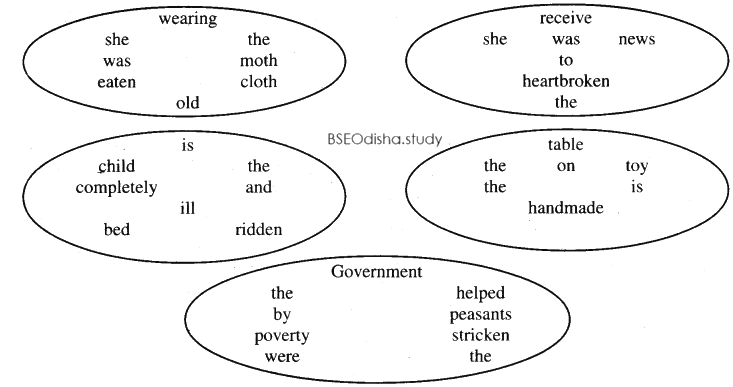
Answer ( ଉତ୍ତର ):
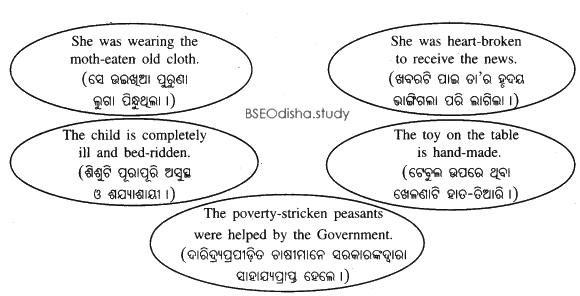
Active and Passive Voice (କର୍ତ୍ତବାଚ୍ୟ ଓ କର୍ମବାଚ୍ୟ ) :
Much objective writing is done in the passive voice. For the passive voice we may use any one of the tenses. With each one we have to use the relevant tense of ‘be’ along with the past participle of the main verb.
| Tense | Form | Examples in the passive | |
| (from the text) | |||
| Simple Present | is/am/are+past participle | Mv’s hands are covered with foam. | |
| Present Progressive | is/am/are+being+PP | It is being repaired at the moment. | |
| Present Perfect | has/have+been+PP | It has been kept verv neatly in that envelope. | |
| Present perfect Progressive | |||
| Simple past | was/were+PP | Maggie’s face was filled with gratitude. | |
| Past Progressive | was/were+being+PP | A letter was being written to her. | |
| Past Perfect
Past Perfect Progressive Future time |
had+been+PP | Some of the chairs and tables had been pushed into comers. | |
| shall/will+be+PP | All kinds of things will be sold in night. | ||
| Referring to | would+be+PP | The grief in her heart would be eased | |
| Future in the past | a little. |
Note: The present perfect progressive and past perfect progressive in the passive voice is very rarely used.
Question 1. Supply the correct form of the verb to fill in the gaps in the following narration.
(ନିମ୍ନ ବର୍ଣ୍ଣନାରେ ଥିବା ଶୂନ୍ୟସ୍ଥାନଗୁଡ଼ିକୁ ବନ୍ଧନୀରେ ଥିବା କ୍ରିୟାର ସଠିକ୍ ରୂପ ବସାଇ ପୂରଣ କର ।)
When the match was coming to an end I ___________ (tell) by my father to leave the stadium quickly to attend to my cousin at the hospital where he ____________ bring) by an ambulance. I ____________ (shock) to hear this. An auto rickshaw _____________ (arrange) and I reached the hospital and then to the ward in no time. I saw that my cousin ____________ (bandage) was lying on the bed with saline hanging on a stand beside the bed. The nurse told me he ___________ (inject) with antibiotics.
Answer ( ଉତ୍ତର ):
When the match was coming to an end I was told my father to leave the stadium quickly to attend to my cousin at the hospital where he had been brought by ambulance. I was shocked to hear this. An auto rickshaw was arranged and I reached the hospital and then the ward in no time. I saw that my cousin was bandaged and was lying on the bed with saline hanging on a stand beside the bed. The nurse told me he had been injected with antibiotics.
There are a few dialogues between the teacher and Deepak. Some dialogues are omitted. Fill in the dialogues according to the sequence. A few hints are given in the bracket.
(ଶିକ୍ଷକ ଓ ଦୀପକ ମଧ୍ୟରେ ହୋଇଥିବା କେତେକ ସଂଳାପ ଏଠାରେ ଅଛି । କେତେକ ସଂଳାପ ଛାଡ଼ି ଦିଆଯାଇଛି । ଘଟଣାକ୍ରମ ଅନୁଯାୟୀ ସଂଳାପଗୁଡ଼ିକୁ ପୂରଣ କର । ବନ୍ଧନୀ ମଧ୍ୟରେ କେତେକ ସୂଚନା ଦିଆଯାଇଛି ।)
Teacher: Deepak. Please come here if you have finished writing
Deepak: Sir, it is over.
Teacher: _________ (demand the copy)
Deepak: Here is my copy. Sir, the question was difficult
Teacher: ___________? (enquiring)
Deepak: Yes Sir, we were taught this subject twice. But I was confused.
Teacher : (Checking the note) Deepak, _________________?
Deepak: Sir, this sentence was actually told by you.
Teacher: It is just and ____________.
Deepak: Sir, I remember your words. Rome was not built in a day.
Teacher: _________? (Asks to know his response)
Deepak: Sir, I was greatly moved by it.
Teacher: ___________?
Deepak: Sir, I found this sentence in a book
Teacher: ____________?
Deepak: I bought the book at the exhibition. There was a great rush at the exhibition.
Teacher: _____________?
Deepak: I also bought one storybook.
Teacher: It is better to have the companionship of books.
Answer ( ଉତ୍ତର ):
Teacher: Deepak. Please come here if you have finished writing
Deepak: Sir, it is over.
Teacher: Show me your copy, (demand the copy)
Deepak: Here is my copy. Sir, the question was difficult
Teacher: Were you not taught this subject? (enquiring)
Deepak: Yes Sir, we were taught this subject twice. But I was confused.
Teacher : (Checking the note) Deepak, Well, you have written a good sentence. Who told this you?
Deepak: Sir, this sentence was actually told by you.
Teacher: It is just and beautiful.
Deepak: Sir, I remember your words. Rome was not built in a day.
Teacher: How do YOU like this? (Asks to know his response)
Deepak: Sir, I was greatly moved by it.
Teacher: Where have you found it?
Deepak: Sir, I found this sentence in a book
Teacher: Where did you buy this book?
Deepak: I bought the book at the exhibition. There was a great rush at the exhibition.
Teacher: What else did you buy there?
Deepak: I also bought one storybook.
Teacher: It is better to have the companionship of books.
After you have completed writing the dialogues, have to role-play with your peers inside the classroom.
(କଥୋପକଥନ ଲେଖୁସାରିବା ପରେ, ଶ୍ରେଣୀକକ୍ଷ ମଧ୍ୟରେ ତୁମ ସାଙ୍ଗମାନଙ୍କ ସହିତ ଅଭିନୟ କର ।)