9th Class English - Chapter 9 No Men are Foreign All Question With Answer
↓ Question & Answer ↓
(a) Read the poem above silently and answer the following questions.
(ଉପରଲିଖ୍ କବିତାଟିକୁ ମନଦେଇ ପଢ଼ ଏବଂ ତଳଲିଖ୍ତ ପ୍ରଶ୍ନଗୁଡ଼ିକର ଉତ୍ତର ଦିଅ ।)
Question 1.
What is this poem about?
(ଏ କବିତାଟି କେଉଁ ବିଷୟରେ ?)
Answer:
This poem is about to convey the people’s message that all men are all equal.
Question 2.
What should we remember?
(ଆମେ କ’ଣ ମନେ ରଖୁବା ଉଚିତ ?)
Answer:
We should remember that no men in this world are strange and no countries are foreign.
Question 3.
What do you mean by ‘uniform’ as mentioned by the poet?
(କବିଙ୍କ ଉଲ୍ଲେଖ ଅନୁସାରେ ‘uniform’ର ଅର୍ଥ ତୁମେ କ’ଣ ବୁଝ ?)
Answer:
‘The uniforms’ means that we are all equal even if we wear different dresses or colors. We all belong to one brotherhood. All means and countries are equal irrespective of their outer appearance.
Question 4.
Why are the uniforms different?
(ବେଶପୋଷାକଗୁଡ଼ିକ ଅଲଗା କାହିଁକି ?)
Answer:
The uniforms are different because of different climatic conditions, social cultures, and different traditions of the people they follow.
Question 5.
What is there beneath all uniforms?
(ପୋଷାକ ତଳେ କ’ଣ (କେଉଁ ଭାବ) ଥାଏ ?)
Answer:
Beneath all the uniforms lies oneness and one brotherhood even if we live in different countries. There are people who live and breathe in a similar way beneath all uniforms.
Question 6.
Do all the people on the earth breathe the same way?
(ପୃଥିବୀର କ’ଣ ସମସ୍ତ ଲୋକ ଏକାଭଳି ଶ୍ଵାସକ୍ରିୟା କରିଥା’ନ୍ତି ?)
Answer:
Yes, all the people on the earth breathe the same way. They take oxygen in and leave carbon dioxide out in the same manner as everybody does.
Question 7.
Who do “our brothers” stand for?
(“our brothers” କାହା ପାଇଁ ଉଦ୍ଦିଷ୍ଟ ?)
Answer:
The expression “Our brothers” stands for people who live in countries other than ours.
Question 8.
How do they walk? Do we walk like them?
(ସେମାନେ କିପରି ଚାଲନ୍ତି ? ଆମ୍ଭେମାନେ କ’ଣ ତାଙ୍କ ଭଳି ଚାଲୁ ?)
Answer:
The peoples of the earth walk equally with their legs in the same manner as others do.
Question 9.
What does the phrase “in which” stand for? (fourth line, first stanza)
(ପ୍ରଥମ ପଦର ଚତୁର୍ଥ ଧାଡ଼ିରେ ଥିବା ବାକ୍ୟାଶ “in which” କାହା ପାଇଁ ଉଦ୍ଦିଷ୍ଟ ?)
Answer:
The phrase “in which” in the fourth line of the first stanza refers to the land where we live.
Question 10.
Where are people buried when they die? Is it common everywhere?
(ମଣିଷ ମଲା ପରେ କେଉଁଠି ସମାଧ୍ ନିଅନ୍ତି ? ଏହା କ’ଣ ସବୁଠାରେ ସମାନ ?)
Answer:
When people die, their dead bodies are buried in the earth. It is very common because all the people have to lie burned in the earth after their death.
Question 11.
All people in the world are our brothers and sisters. How should we treat them?
(ଏ ସଂସାରରେ ସମସ୍ତେ ଆମମାନଙ୍କର ଭାଇ ଓ ଭଉଣୀ । ଆମେ ସେମାନଙ୍କୁ କିଭଳି ବ୍ୟବହାର କରିବା ?)
Answer:
All people in the world are our brothers and sisters. We shall treat them with love and affection as our own brothers and sisters.
Question 12.
Who does.“They” refer to in the first line of the second stanza?
(ଦ୍ୱିତୀୟ ପଦର ପ୍ରଥମ ଧାଡ଼ିରେ ଥିବା ‘“They” ଶବ୍ଦଟି କାହା ପାଇଁ ଉଦ୍ଦିଷ୍ଟ ?)
Answer:
In the first line of the second stanza, ‘They’ refers to all the people of other countries of the world.
Question 13.
What do we get from the sun? Do people in other countries get it?
(ଆମେ ସୂର୍ଯ୍ୟଙ୍କଠାରୁ କ’ଣ ପାଇଥାଉ ? ଅନ୍ୟ ଦେଶର ଲୋକମାନେ କ’ଣ ତାହା ପାଆନ୍ତି ?)
Answer:
We get light and heat from the sun. Yes, the people of other countries enjoy the sun in the same manner.
Question 14.
How is air essential to us? Is it essential for people in other countries?
(ବାୟୁ କିପରି ଏକାନ୍ତ ଦରକାରୀ ? ଏହା କ’ଣ ଅନ୍ୟ ଦେଶଗୁଡ଼ିକର ଲୋକମାନଙ୍କ ପାଇଁ ଦରକାରୀ ?)
Answer:
The air is extremely essential to us. Because we breathe in air and without air, no life exists. The people of other countries take air in the same manner because they can no longer live without air
Question 15.
Can we live without water? What about the people in other countries?
(ଜଳ ବିନା ଆମେ ବଞ୍ଚିପାରିବା କି ? ଅନ୍ୟ ଦେଶର ଲୋକମାନଙ୍କ ବିଷୟରେ କ’ଣ କୁହାଯାଇପାରିବ ?)
Answer:
No, we cannot live without water. Because water is called life. Without water, no plants and animals can live. The people of other countries can’t live without water.
Question 16.
What are the people in other countries aware of? Do we also realize it in the same way?
(ଅନ୍ୟ ଦେଶର ଲୋକମାନେ କେଉଁ ବିଷୟରେ ସଚେତନ ଅଟନ୍ତି ? ଆମେମାନେ କ’ଣ ସେହିଭଳି ଅନୁଭବ କରୁ ?)
Answer:
The people of other countries are aware of the sun, air, and water. Without them, no living beings can exist. We also realize it in the same manner as others do.
Question 17.
Who is benefitted if there are peaceful harvests? How?
(ଅମଳ ଶାନ୍ତିମୟ ହେଲେ କେଉଁମାନେ ଉପକୃତ ହୁଅନ୍ତି ? କିପରି ?)
Answer:
People of all countries are benefitted if there are peaceful harvests. Because they will be fed to get the energy to live.
Question 18.
Can there be peaceful harvests if there is a war? What happens to people when there is a war or after a war?
(ଯଦି ଯୁଦ୍ଧ ହୁଏ, ସେଠାରେ ସୁନ୍ଦର ଅମଳ ହୋଇପାରିବ କି ? ଯୁଦ୍ଧ ପରେ ଯୁଦ୍ଧ ହେଲେ, ଲୋକମାନଙ୍କର କ’ଣ ଘଟିବ ?)
Answer:
If there is a war, peaceful harvests will be condemned. These power-loving people will rob away the peace and the people will be deprived of their own possessions. They have to live under constant fear and poverty.
Question 19.
What does “their hands are ours” mean?
(‘ସେମାନଙ୍କ ହାତଗୁଡ଼ିକ ଆମର’’ କହିବା ଅର୍ଥ କ’ଣ ?)
Answer:
“Their hands are ours” means that the people outside our country work hard using their hands for their livelihood as the people of our country do.
Question 20.
Who do the words “they” and “ours” refer to in the first line of the third stanza?
(ତୃତୀୟ ପଦର ପ୍ରଥମ ଧାଡ଼ିରେ ଥିବା ‘they” ଏବଂ “ours” କାହା ପାଇଁ ଉଦ୍ଦିଷ୍ଟ ?)
Answer:
The words ‘they’ refer to the people of other countries and ‘ours’ refers to the people of our country.
Question 21.
How can we win other people?
(ଅନ୍ୟ ଲୋକମାନଙ୍କୁ ଆମେ କିପରି ଜିତିପାରିବା ?)
Answer:
We can win other people by love and kindness and not by force or war.
Question 22.
What does common life mean? (Birth, death, joyfulness, etc. Add more.)
[ସାଧାରଣ ଜୀବନ କହିଲେ କ’ଣ ବୁଝାଏ ? (ଜନ୍ମ, ମୃତ୍ୟୁ, ଆନନ୍ଦ ଇତ୍ଯାଦି । ଅଧିକ କୁହ ।)]
Answer:
Common life means birth, death, joyfulness, breathing, water, air, and all the sense organs.
Question 23.
Who tells us to hate our brothers?
(ଆମମାନଙ୍କ ଭାଇମାନଙ୍କୁ ଘୃଣା କରିବାପାଇଁ କେଉଁମାନେ ଆମକୁ କହିଥା’ନ୍ତି ?)
Answer:
The power-hungry people tell us to hate our brothers or the people of other countries.
Question 24.
What does “to hate our brothers” mean? (stanza-4)
(‘ଆମମାନଙ୍କ ଭାଇମାନଙ୍କୁ ଘୃଣା କରିବା’ର ଅର୍ଥ କ’ଣ ?) (୪ର୍ଥ ପଂକ୍ତି)
Answer:
“To hate our brothers” means to hate the people of other countries. It is the command of power-hungry people.
Question 25.
How do we dispossess our brothers in another part of the world?
(ପୃଥିବୀର ଅନ୍ୟ ଅଂଶରେ ଥିବା ଆମ ଭାଇମାନଙ୍କୁ ଆମେ କିପରି ଅଧିକାରରୁ ବଞ୍ଚିତ କରୁ ?)
Answer:
The people living in another part of the world are our brothers. We are told to hate and dispossess them by depriving the of possession of their own. We dispossess them by waging war against them.
Question 26.
What is “human earth”?
(‘ମଣିଷର ପୃଥିବୀ’ କ’ଣ ?)
Answer:
“The human earth” is the earth where we live in. It belongs to people in general on the earth.
Question 27.
How do we defile the human earth?
(ଆମେ କିପରି ମଣିଷର ଏହି ପୃଥିବୀକୁ ପ୍ରଦୂଷିତ କରୁ ?)
Answer:
This is God’s earth. We are equal in all respects. We belong to one brotherhood. But the power-hungry people pollute our sweet brotherhood. They command us to hate and betray others.
Question 28.
To whom do we harm by going to war?
(ଯୁଦ୍ଧ କରି ଆମେ କେଉଁମାନଙ୍କର କ୍ଷତି ପହଞ୍ଚାଇଥାଉ ?)
Answer:
By going to war, we harm ourselves and our brothers in other countries. We snatch away the peace and their possession. The power-hungry people teach us to hate and betray instead to love.
Question 29.
What does “our hells of fire” mean?
(“our hells of fire” ର ମାନେ କ’ଣ ?)
Answer:
The expression “The hells of fire” means the fire in the hell in which sinners bum. The human earth in the same way suffers from war-time troubles. The freshness and purity of air are polluted due to war.
Question 30.
What do you mean by “innocence of air”?
(“innocence of air” ର ମାନେ କ’ଣ ?)
Answer:
“Innocence of air” means the freshness and purity of air – nature has blessed us. It is polluted due to the continuance of the war.
(b) Choose the right option.
(ସଠିକ୍ ବିକଳ୍ପଟି ବାଛ ।)
Question 1.
A single body breathes beneath all _______________.
(A) souls
(B) bodies
(C) uniforms
(D) heads
Answer:
(C) uniforms
Question 2.
What are all people aware of?
(A) water
(B) air
(C) sun
(D) all of the above
Answer:
(D) all of the above
Question 3.
What are we doing to the human earth according to the poet?
(A) decorating
(B) defiling
(C) saving
(D) recreating
Answer:
(B) defiling
Question 4.
How can strength be won?
(A) By war
(B) By love and kindness
(C) By betraying
(D) By taking arms against each other
Answer:
(B) By love and kindness
Question 5.
We should remember that _______________.
(A) no men are foreign
(B) no men are strange
(C) no men are our enemies
(D) all of the above
Answer:
(D) all of the above
Question 1.
What message does the poet convey in the poem “No Men Are Foreign”?
(“No Men Are Foreign” କବିତାରେ କବି କେଉଁ ସନ୍ଦେଶ ଦେଇଛନ୍ତି ?)
Answer:
The poet tries to convey the message that all men are equal. We all belong to one brotherhood. We shouldn’t hate our brothers but love them.
Question 2.
How do we defile the human earth? Apart from war, what other things do we do to defile the earth?
(ଆମେ ମଣଷିର ଏହି ପୃଥିବୀକୁ କିପରି ପ୍ରଦୂଷିତ କରୁ ? ଯୁଦ୍ଧ ବ୍ୟତୀତ ପୃଥିବୀକୁ ପ୍ରଦୂଷିତ କରିବାକୁ ଆମେ ଆଉ କ’ଣସବୁ କରୁ ?)
Answer:
We defile the human earth through war. Apart from this, we defile it with hate and betrayal.
Question 3.
The poet uses the word “remember” four times in this poem. What does he want to convey?
(‘remember” ଶବ୍ଦଟି କବି କବିତାରେ ଚାରି ଥର ବ୍ୟବହାର କରିଛନ୍ତି । ସେ କ’ଣ କହିବାକୁ ଚାହୁଁଛନ୍ତି ?)
Answer:
The poet uses the word “remember” four times in the poem to convey the importance of his saying.
Question 4.
The poet repeats the line “Remember, no men are strange, no countries foreign” in the last line with some changes. What are those small changes? Do both lines mean the same?
( କବି “Remember, no men are strange, no countries foreign” ଧାଡ଼ିଟିକୁ କବିତାର ଶେଷ ଧାଡ଼ିରେ ସାମାନ୍ୟ ପରିବର୍ତ୍ତନ କରି ପୁନରାବୃତ୍ତି କରିଛନ୍ତି ? ଏହି ଛୋଟ ପରିବର୍ତ୍ତନଟି କ’ଣ ? ଦୁଇଟିଯାକ ଧାଡ଼ିର ଅର୍ଥ କ’ଣ ସମାନ ?)
Answer:
The poet repeats the line “Remember, no men are strange no countries foreign”. But in the last stanza, he says – no men are foreign and no countries strange. Both lines mean the same.
Question 5.
How does the poet suggest that all people in the world are equal?
(କବି କିପରି ପୃଥିବୀର ସମସ୍ତ ଲୋକ ସମାନ ପ୍ରତିପାଦିତ କରିଛନ୍ତି ?)
Answer:
The poet suggests that all people in the world are equal. Because they enjoy the sun, air, and water equally. They breathe and sleep in the same fashion. Moreover, the same color of blood flows in their bodies.
Question 6.
One of the greatest philosophers of the world, Socrates wrote the following sentence. “I am a citizen, not of Athens or Greece, but of the world.” Do these sentences match the theme of the poem? How?
(ପୃଥିବୀର ବଡ଼ ଦାର୍ଶନିକ ସକ୍ରେଟିସ୍ ନିମ୍ନ ବାକ୍ୟଟି ଲେଖୁଛନ୍ତି । ‘ମୁଁ ଆଥେନ୍ସ୍ ବା ଗ୍ରୀସ୍ର ନାଗରିକ ନୁହେଁ, ମୁଁ ସମଗ୍ର ପୃଥିବୀର ନାଗରିକ ।’’ ଏହି ଉକ୍ତିଟି କବିତାର ବିଷୟବସ୍ତୁ ସହ ସମାନ କି ? କିପରି ?)
Answer:
Yes, the philosopher Socrates’s sentence matches the theme of the poem. Because Socrates sees all the people of the world are equal. The theme of the poem says in the same manner. According to Socrates, he is a citizen not of Athens or Greece, but of the world.
1. Let’s recite the poem :
(ଆସ, କବିତାଟିକୁ ଆବୃତ୍ତି କରିବା)
The teacher divides the class into five groups.
S/he reads aloud the poem two times with proper word stress and intonation.
S/he reads the poem aloud line by line and students repeat after him/her.
Students read the first line and the teacher reads aloud the second line and so on till the whole poem is complete.
Each group reads a stanza and the rest of the groups repeat after them and so on.
Finally each group reads a stanza.
The teacher invites some students to recite the poem individually.
2. Let’s say the following dialogue.
(ଆସ, ତଳଲିଖୁତ ସଂଳାପଟି କହିବା ।)
Imagine that David is a person, who works for a reputed telecasting organization. He interviews the poet, James Kirkup in his poem “No Men Are Foreign”. See, how the poet interacts with David.
David: Good evening, Sir.
The Poet: Good evening David!
David: Could you share some information on your poem ‘No Men Are Foreign’, Sir?
The Poet: I’d welcome any questions.
David: “No Men Are Foreign” is a wonderful piece of poetry. What made you pen the poem?
The Poet: The sharp distinction between man and man.
David: How’s that, Sir?
The Poet: You see, all men are born, live, and die. This is common to all. They feel pain or pleasure in one and the same way. But, you see, it’s the boundary, attires, languages, and beliefs which create differences among men on the earth.
David: Will you add something more, please?
The Poet: Well, here you’re. All men belong to one earth. They enjoy benefits from the sun, air, and water equally well. Everyone works hard for bread. I can’t just believe how the walls of castes, creed, and color divide humanity.
David: Thank you, Sir! Your thoughts are really great!
The Poet: You’re welcome.
David: Good night, Sir!
The Poet: Goodbye David, see you!
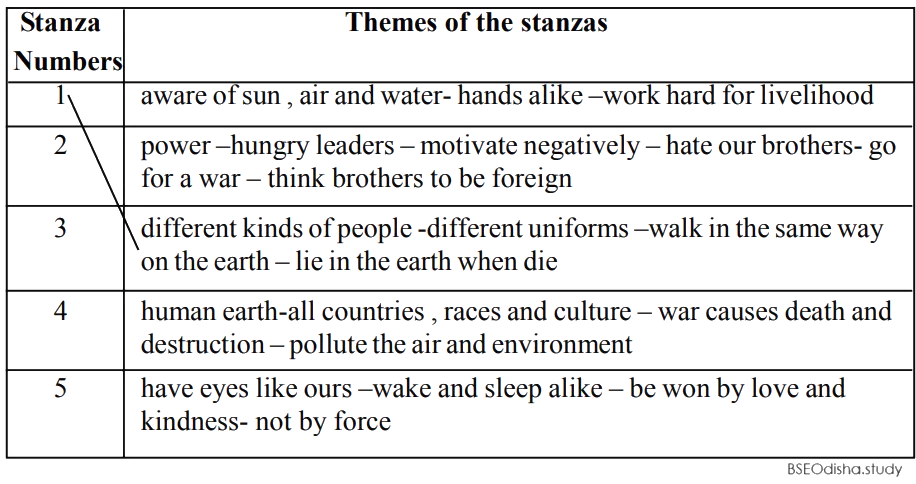
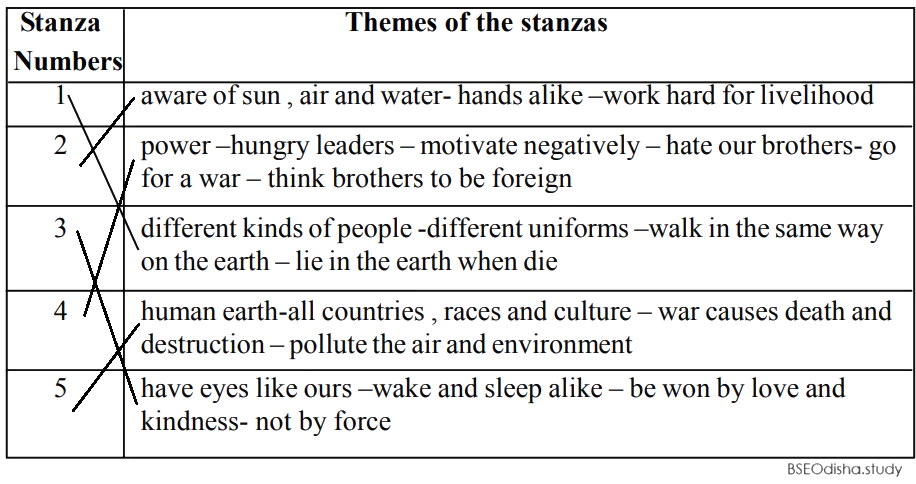
3. Let’s match the stanza with their themes.
(ଆସ, ପଦଗୁଡ଼ିକୁ ବିଷୟବସ୍ତୁ (themes) ସହ ମିଳାଇବା ।)
Draw lines to match column ‘A’ with column ‘B’. ‘A’ contains the stanza numbers and ‘B’ contains the themes. One is done for you. (ସ୍ତମ୍ଭ ‘A’ ଓ ସ୍ତମ୍ଭ ‘B’କୁ ମିଳାଇବା ପାଇଁ ଗାର ଟାଣ । ‘A’ରେ ପଂକ୍ତିର କ୍ରମସଂଖ୍ୟା ଓ ‘B’ରେ ବିଷୟବସ୍ତୁ ଅଛି । ଗୋଟିଏ ତୁମ ପାଇଁ କରି ଦିଆଯାଇଛି ।)
Answer:
4. Let’s write :
(ଚାଲ ଲେଖୁବା)
Write a paragraph for each stanza of the poem. Go through the above matching activity before you begin to write. One paragraph is written to help you. (କବିତାର ପ୍ରତ୍ୟେକ ପଂକ୍ତି ପାଇଁ ଗୋଟିଏ ଗୋଟିଏ ଅନୁଚ୍ଛେଦ ଲେଖ । ଲେଖୁବା ପୂର୍ବରୁ ଉପରେ ପ୍ରଦତ୍ତ ମେଳକ କାର୍ଯ୍ୟାବଳୀକୁ ଅନୁଧ୍ୟାନ କର । ଗୋଟିଏ ଅନୁଚ୍ଛେଦ ତୁମକୁ ସାହାଯ୍ୟ କରିବା ପାଇଁ ଲେଖାଯାଇଛି ।)
The poem No Men Are Foreign” has five stanzas. The first stanza is about how people in different countries wear different uniforms. They walk on the same earth using their legs. We also walk so using our legs. They are buried in the earth when they die. We are also buried in the earth when we die. So we are equal.
Answer:
The poem “No Mean Are Foreign” has five stanzas. The first stanza is about how people in different countries wear different uniforms. They walk on the same earth using their legs. We also walk so using our legs. They are buried in the earth when they die. We are also buried in the earth when we die. So we are equal. The second stanza is about how the people of other lands are aware of the sun, air, and water as us. They get the same benefits as we get from them.
They work hard with their hands for livelihood. We also do the same. The third stanza is about how the people of other countries have eyes like us that wake and sleep. The people of every land have a common life. They also recognize and understand like us. We can win them by love not by force. The fourth stanza is about how power-hungry people motivate us negatively.
They told us to hate and betray our brothers. They command us to wage war against the people of other countries who are really our brothers. The fifth stanza is about how we defile the human earth through war. War causes death and destruction. All countries, races, and cultures are creations of God. We also pollute this earth with hate and betrayal.